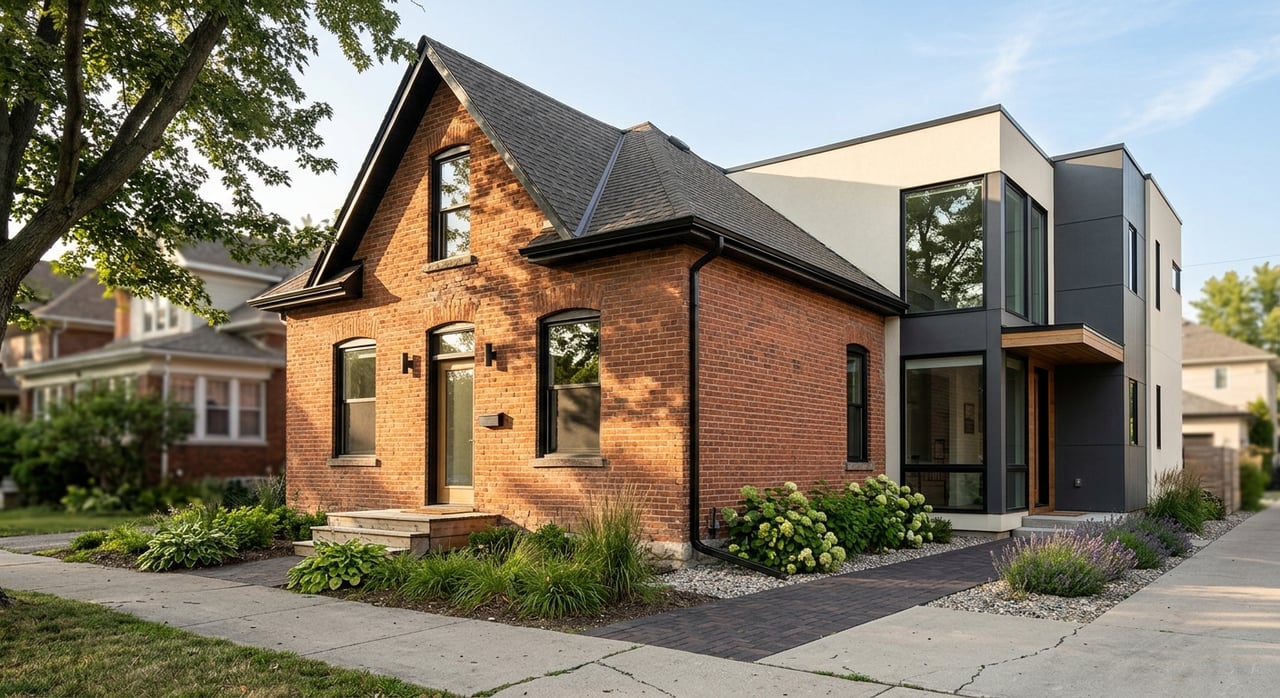
Are you trying to figure out what kind of home you can actually find in Auburn, Indiana? If so, you are not alone. Auburn offers more variety than many buyers expect, with everything from older character homes near the historic core to newer subdivision properties on the edge of town. This guide will help you understand how Auburn’s neighborhoods and housing styles fit together so you can search with more confidence. Let’s dive in.
Auburn's Housing Market at a Glance
Auburn is a relatively compact housing market, not a sprawling metro area. The city has an estimated 2025 population of 14,068, with 5,881 housing units and a 76.5% owner-occupied rate. That gives you a useful starting point if you are comparing Auburn with larger Northeast Indiana communities.
The housing stock also leans strongly toward detached single-family homes. The median owner-occupied home value is $190,800, while recent market data shows closed sale prices and asking prices can vary quite a bit depending on location, home age, and style. Redfin reported a median sale price of $251,100 over the three months ending in May 2026, while Zillow showed a typical home value of $284,913 and a median list price of $354,917 as of late June 2026.
That gap matters when you are planning your search. In Auburn, list price does not always match recent closed-sale patterns, so it helps to look at the full picture instead of focusing on one number.
Auburn's Three-Part Neighborhood Pattern
One of the easiest ways to understand Auburn is to think of it as a three-part market. You will generally find historic downtown-adjacent blocks near the core, a broad middle band of postwar and late-20th-century homes, and newer subdivision-style neighborhoods around the edges of town.
This pattern is supported by Auburn’s housing age data, local historic district information, and zoning structure. It also helps explain why one part of town may feel very traditional while another feels more suburban and newer.
Historic core neighborhoods
Downtown Auburn is the city’s clearest historic residential anchor. According to the city’s downtown revitalization plan, the downtown study area includes the Downtown Auburn Historic District, the North Main Street Historic District, and the Eckhart Library Historic District, along with nearby residential areas around the core.
The National Register nomination describes the blocks around the downtown district as primarily residential, with homes ranging from small cottages to medium-sized mansions. These areas were shaped by Auburn’s carriage, buggy, and automobile era, which helps explain the architectural variety you may notice from one street to the next.
If you like older homes with visible character, this part of Auburn may stand out to you. The streetscape can feel layered rather than uniform, with homes that reflect different periods and design influences.
Postwar and late-20th-century neighborhoods
Outside the historic core, Auburn has a large middle band of detached single-family housing built in the decades after World War II and through the late 20th century. Point2Homes data shows the city’s median construction year is 1980, which is a helpful snapshot of Auburn’s overall housing mix.
This part of the market often gives buyers a practical middle ground. You may find homes with more standard layouts, familiar lot sizes, and a more consistent suburban feel than the older in-town blocks.
For many buyers, these neighborhoods can offer a balance of space, function, and price. They are a key reason Auburn is not simply a historic-home market.
Newer edge-of-town subdivisions
Auburn also includes newer subdivision-style development, especially in the post-1990 construction bands. Point2Homes shows that 16.0% of homes were built in the 1990s, 13.1% from 2000 to 2009, 6.3% from 2010 to 2019, and 3.2% in 2020 or later.
These areas can appeal to buyers who want a more recent build, a more modern floor plan, or a neighborhood layout that feels less tied to the older city grid. In some cases, these edge-of-town pockets also represent Auburn’s higher price ranges.
Zillow’s neighborhood-level values help show that spread. Reported values include Longwood at $298,887, Lake Pointe Villas at $316,984, Pine Valley at $354,590, Eagle Lake at $434,184, and La Cabreah at $485,587.
Housing Styles You May See in Auburn
Auburn’s housing styles reflect the city’s age mix. Some areas show strong historic character, while others lean toward practical postwar construction or newer subdivision design.
If you are home shopping here, it helps to know that Auburn does not present one single architectural identity. Instead, you are likely to see a blend of styles based on when a neighborhood developed.
Older historic styles
In Auburn’s older core, documented styles include Victorian-era forms, Italianate, Romanesque Revival, Colonial Revival, and Spanish Colonial Revival. The historic districts also include vernacular cottages and early 20th-century mixed-use residential buildings within the broader historic fabric.
For buyers, that often means more architectural detail and more visible variation from home to home. You may see differences in rooflines, porches, window shapes, and exterior materials that are less common in newer neighborhoods.
These homes can offer a strong sense of place. They may also require a different mindset if you are comparing them with newer construction, since layout, updates, and maintenance needs can vary widely.
Common Indiana neighborhood homes
Based on Auburn’s housing age profile, buyers may also run into housing forms commonly found in Indiana towns, such as bungalows and American Foursquares, along with postwar small houses. This is an informed inference tied to the city’s age mix rather than an official Auburn style survey.
These homes often sit between the ornate historic core and the more recent subdivision market. If you want a home with some character but a more approachable size and layout, this segment may be worth watching closely.
Newer suburban-style homes
In newer Auburn neighborhoods, you are more likely to find later 20th-century and 21st-century subdivision homes. These properties may offer more modern room arrangements, attached garages, and a more uniform neighborhood appearance.
For buyers who want fewer surprises in terms of age and structure, these homes can feel more straightforward. They also tend to fit the expectations of many move-up buyers who want functional living space and a more current layout.
How Zoning Shapes Auburn Neighborhoods
Auburn’s zoning code helps explain why the city feels so varied. The TR, or Traditional Residential district, is intended for older, traditional-style existing neighborhoods, while R1, R2, and R3 districts cover detached single-family homes on medium-to-large, medium, and small-to-medium lots.
That means Auburn is not built around one standard lot pattern or one housing type. As you move through the city, you may notice shifts in lot size, street layout, density, and home age that match these different residential frameworks.
For a buyer, this matters because it affects the feel of a neighborhood. It can also shape what kind of home inventory tends to show up in different parts of town.
What Buyers Should Expect in Auburn
Auburn’s housing market can move quickly. Redfin describes the market as very competitive, with homes selling in 18 days on average and 28.4% selling above list price in the recent three-month period. Zillow reported a median days to pending of 11 and a median sale-to-list ratio of 0.999.
That pace is important if you are narrowing your search by neighborhood style. A well-kept historic home near downtown, a practical mid-century property, or a newer home in a popular subdivision may not stay available long.
The good news is that Auburn offers real variety within a smaller city footprint. If you are clear about what matters most to you, whether that is character, lot size, home age, or newer construction, you can search more strategically.
How to Narrow Your Auburn Home Search
If you are just getting started, it helps to decide which of Auburn’s three broad housing categories fits your goals best. A historic area may offer charm and architectural detail. A mid-period neighborhood may offer balance and practicality. A newer subdivision may offer modern design and a more recent build date.
You should also compare list prices with recent sale trends. In Auburn, asking prices can run noticeably above recent closed-sale medians, so understanding neighborhood-level value ranges is especially useful.
Most of all, be ready to act when the right home appears. In a smaller but competitive market like Auburn, preparation can make a real difference.
Whether you are drawn to Auburn’s historic streets, its established single-family neighborhoods, or its newer edge-of-town communities, having local guidance can help you sort through the options and move with confidence. If you are planning a move in Auburn or the surrounding Northeast Indiana area, connect with MSD Group, LLC (Lion & Christlieb) for strategic, responsive help with your next home search.
FAQs
What types of neighborhoods are most common in Auburn, Indiana?
- Auburn is best understood as a three-part market with historic downtown-adjacent neighborhoods, a large middle band of postwar and late-20th-century single-family homes, and newer subdivision-style neighborhoods around the edges of town.
What housing styles can buyers find in Auburn, Indiana?
- Buyers in Auburn may see historic styles such as Victorian-era forms, Italianate, Romanesque Revival, Colonial Revival, and Spanish Colonial Revival, along with cottages, postwar houses, and newer subdivision homes.
Are most homes in Auburn, Indiana owner-occupied?
- Yes. Census QuickFacts reports that 76.5% of Auburn housing is owner-occupied, which supports the city’s strong single-family residential character.
Are newer homes available in Auburn, Indiana?
- Yes. Auburn has a meaningful share of newer housing, with 16.0% of homes built in the 1990s, 13.1% built from 2000 to 2009, 6.3% built from 2010 to 2019, and 3.2% built in 2020 or later.
How competitive is the Auburn, Indiana housing market?
- Recent market data suggests Auburn is moving quickly, with homes selling in 18 days on average according to Redfin and a median days to pending of 11 according to Zillow.
How do Auburn, Indiana home prices vary by neighborhood?
- Auburn home values can vary widely by area, with reported neighborhood values ranging from about $298,887 in Longwood to about $485,587 in La Cabreah, showing a broad spread within the city.